
Kingtronics International Company — Inspired by Innovation

When power systems and industrial equipment face sudden voltage spikes, the entire circuit can be put at risk. That’s why TVS (Transient Voltage Suppressor) diodes play such a critical role — they clamp dangerous surges within nanoseconds, protecting sensitive ICs, MOSFETs and controllers.
This article is written for design and maintenance engineers who work with power supplies, industrial equipment, automation and high-reliability systems. It explains why TVS diodes have become a standard protection element and how Kingtronics TVS series can help you build stable, cost-effective designs.
Why TVS Diodes Are Essential in Power Supplies
Power supply stages sit at the front line of the system. They see switching noise from converters, disturbances from the AC line and, in some regions, lightning-related surges. Without proper surge protection, these events can damage rectifiers, controllers or downstream loads.
A correctly selected TVS diode clamps the surge to a defined level, absorbs the pulse energy and allows the supply to recover, instead of letting the transient propagate into the rest of the circuit.
Common Use Cases in Power Electronics
Based on industry applications and Kingtronics internal data, TVS diodes are commonly used in power-related designs such as:
• AC/DC converters and power adapters
• General switching power supplies for industrial and IT equipment
• High-power SMPS in servers, automation and charging systems
• SMPS output regulation lines (3.3V / 5V / 12V) for logic and control rails
• Lightning suppression boards and surge protection modules
• Dedicated transient suppression circuits at supply input or critical nodes
Recommended Kingtronics TVS Series for Power Designs
• SMBJ Series – Compact SMD protection for SMPS output and converter boards where PCB area is limited
• SMCJ Series – Higher surge capability SMC package for high-power PSUs and industrial converters
• P6KE Series – Versatile axial solution for switching power supply and general transient protection
• 1.5KE Series – High-surge axial TVS for heavy-duty SMPS and robust industrial power units
• 5KP Series – Designed for lightning and high-energy suppression in harsh line and surge environments
For full technical data and the complete list of available TVS ratings, browse the Kingtronics TVS diode selection page and explore detailed surge protection options.
Explore Kingtronics TVS Diode Series →
To request quotations, cross-reference support or discuss design-in requirements with our engineers:
Industrial Electronics: Harsh Environments Need Robust Protection
Industrial and transportation electronics often operate in electrically harsh environments. Motors, long cable runs, inductive loads and external interfaces can all inject noise and surges into control and monitoring circuitry.
According to Kingtronics application data, TVS diodes are widely used to protect critical industrial and safety-related systems, including:
• Aircraft engine controllers and onboard electronics
• Elevator control systems and building automation panels
• Fire alarm systems and emergency signaling devices
• Gas detectors and safety monitoring equipment
• Industrial control boards for machinery and process control
• Voltage regulator modules and power distribution boards
• Power MOSFET protection in switching and motor control stages
• Black box recorders and data logging systems
• Image inspection and vision systems in production lines
In these high-reliability scenarios, both surge energy and response time matter. Kingtronics offers options across SMAJ / SMBJ / SMCJ / 1.5KE / P6KE / P4KE / SA Series, so designers can choose the package, power rating and voltage range that match their environment and qualification level.
Featured Series & Datasheets
When you move from concept to implementation, it helps to compare package, surge rating and use cases at a glance. The table below summarizes key Kingtronics TVS families and links directly to product pages or datasheets for further design work.
| Series | Package | Peak Pulse Power | Typical Applications | Product / Datasheet |
|---|---|---|---|---|
| SMAJ | SMA | 400 W | Compact SMPS, telecom, adapter boards | View SMAJ product page |
| SMBJ | SMB | 600 W | SMPS output lines, industrial control | Explore SMBJ product page |
| SMCJ | SMC | 1500 W | High-power PSU, automation systems | Discover SMCJ product page |
| P4KE | Axial | 400 W | General purpose transient suppression | Download P4KE datasheet |
| P6KE | Axial | 600 W | Switching PSU protection, industrial boards | Download P6KE datasheet |
| 1.5KE | Axial | 1500 W | Heavy-duty SMPS, industrial PSU | Download 1.5KE datasheet |
| SA5.0A | Axial | 500 W | Low-voltage lines, signal protection | Download SA5.0A datasheet |
For cross-reference or engineering support, or if you are qualifying multiple protection levels across different lines, our team can help you match the proper TVS series to your operating environment and surge profile.
Extended Learning: Video Breakdown
For engineers who prefer visual explanations, the following reference video gives a clear overview of TVS operation and surge behavior:
TVS Diode Basics & Surge Protection Explained
This video pairs well with this article — readers can quickly connect theory, waveforms and real-world protection circuits.
Conclusion
Power supplies and industrial equipment require reliable surge protection. TVS diodes remain one of the simplest and most effective ways to improve system robustness and extend field lifetime.
With a full range covering SMAJ to 5KP high-energy series, Kingtronics provides robust and cost-optimized TVS solutions for OEMs, EMS and industrial manufacturers. Whether you are designing a new platform or updating an existing board, selecting the right TVS diode can significantly reduce field failures and service costs.
If you need help selecting the right TVS diode for your design, our team is ready to assist.
Kingtronics International Company — Inspired by Innovation
Introduction: Why Diode Selection Matters
For many engineers, selecting the right diode or rectifier is not as simple as checking a datasheet. The challenge lies in balancing multiple parameters—voltage, current, recovery time, and package type— while ensuring long-term reliability. This diode selection guide simplifies the process into clear rectifier selection steps that reduce design risks and improve efficiency.
1. Types of Diodes You Should Know
Before diving into how to choose diode for your design, let’s review the key categories:
- Schottky Diodes – Low forward voltage drop, fast switching, ideal for power supplies and high-frequency circuits.
- Fast Recovery Diodes – Optimized for reduced reverse recovery time, commonly used in lighting drivers, motor control, and industrial automation.
- TVS (Transient Voltage Suppression) Diodes – Protect sensitive circuits from ESD, surges, and transient spikes. Essential in automotive, communication, and industrial environments.
- General Rectifiers – Reliable, high-voltage devices used for AC/DC rectification and industrial power systems.
Diode & Rectifier Selection Guide Table
Type Key Features Typical Applications Explore Products Schottky Diode Low VF (0.2–0.4V), very fast switching, low power loss Power supply rectification, DC-DC converters, RF circuits View Schottky Series Fast Recovery Diode Short reverse recovery time, moderate VF, high efficiency LED drivers, motor control, industrial automation, SMPS View Fast Recovery Series TVS Diode Transient voltage suppression, protects against ESD & surges Circuit protection, automotive, communication, consumer electronics View TVS Series General Rectifier High voltage rating, high surge current capability, reliable AC/DC rectification, power adapters, industrial power supply View Rectifier Series
| Type | Key Features | Typical Applications | Explore Products |
|---|---|---|---|
| Schottky Diode | Low VF (0.2–0.4V), very fast switching, low power loss | Power supply rectification, DC-DC converters, RF circuits | View Schottky Series |
| Fast Recovery Diode | Short reverse recovery time, moderate VF, high efficiency | LED drivers, motor control, industrial automation, SMPS | View Fast Recovery Series |
| TVS Diode | Transient voltage suppression, protects against ESD & surges | Circuit protection, automotive, communication, consumer electronics | View TVS Series |
| General Rectifier | High voltage rating, high surge current capability, reliable | AC/DC rectification, power adapters, industrial power supply | View Rectifier Series |
Engineers can simplify component sourcing by choosing from manufacturers who provide full series coverage. Kingtronics offers a complete range of Schottky, Fast Recovery, TVS, and General Rectifiers — all with international certifications and competitive lead times.
2. Key Selection Criteria (Rectifier Selection Steps)
When working through rectifier selection steps, always evaluate these critical factors:
- Voltage Rating (VR, VRRM): Select a diode rated at least 20–30% above the circuit’s peak operating voltage.
- Current Rating (IF, IFSM): Ensure the device can handle both steady load current and surge currents during startup or transients.
- Forward Voltage Drop (VF): Lower VF improves efficiency and reduces heat loss, especially in power supply designs.
- Reverse Recovery Time (trr): Critical in high-speed switching applications such as SMPS or motor drives.
- Package Type (SMA, SMC, DO-214, etc.): Choose based on board space, thermal dissipation, and assembly method.
3. Common Mistakes & How to Avoid Them
Even experienced engineers can misstep when selecting diodes:
- Choosing voltage too close to operating margin
→ Always add safety headroom. - Ignoring surge current (IFSM)
→ Verify startup/inrush tolerance, not just average current. - Overlooking thermal considerations
→ Small SMD packages may fail under sustained load. - Confusing diode functions
→ A Schottky diode cannot replace a TVS in surge protection.
4. Application Examples
Practical use cases of how to choose diode effectively:
- Power Supply Circuits – Schottky diodes improve efficiency and reduce power loss.
- Lighting Systems – Fast recovery diodes provide stable performance in LED drivers.
- Industrial Control – High-surge rectifiers enhance reliability in automation systems.
- Circuit Protection – TVS diodes safeguard ICs from unexpected voltage spikes.
5. Simplifying the Selection Process
Pain Point: Engineers often face complex datasheets and ambiguous specs.
Highlight: A structured diode selection guide reduces guesswork and minimizes design errors.
Simple process flow:
- Define application requirements (voltage, current, switching speed).
- Identify the correct diode category (Schottky, Fast Recovery, TVS).
- Match package type and thermal performance.
- Validate surge and recovery specifications.
6. Extended Learning: Video Resource
▶ Watch this video for a visual introduction to diodes and rectifiers:
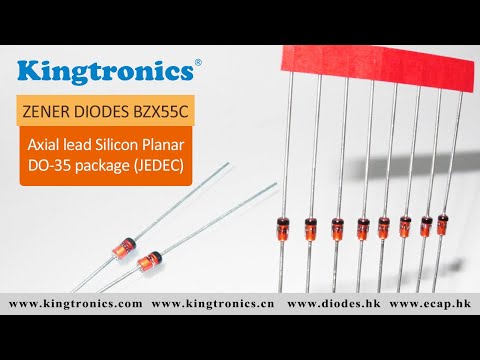
The video not only explains diode categories but also takes you inside Kingtronics’ factory, showing how strict quality processes ensure product reliability and performance.
Conclusion & Next Steps
Selecting the right diode or rectifier doesn’t have to be overwhelming. By following these rectifier selection steps, you’ll simplify the process, reduce design risks, and ensure better performance for your circuit.
Whether you are designing a new power supply, upgrading industrial control systems, or protecting sensitive circuits, Kingtronics provides not only a comprehensive diode portfolio, but also engineering support to guide you through the selection process.
👉 Explore our full range of Diodes & Rectifiers
👉 Need help with your design? Contact our technical team

Contact us
Tel: (86) 769 8118 8110
Tel: (852) 8106 7033
Fax: (852) 8106 7099
E-mail: info@kingtronics.com
Microsoft Teams: Kingtronics.sales via Teams
WhatsApp: Chat with us on WhatsApp
Web: www.Kingtronics.com
YouTube: www.youtube.com/c/Kingtronicskt
About
Kingtronics International Company was established in 1995 located in Dongguan City of China to handle all sales & marketing for factories located in Chengdu, Sichuan and Zhaoqing, Guangdong, China. In 1990, we established the first factory to produce trimming potentiometer and in 1999 we built up new factory in Zhao Qing, Guangdong. Now with around 850 workers, Kingtronics produce trimming potentiometers, dipped tantalum capacitors, multilayer ceramic capacitors, and diode & bridge rectifier. We sell good quality under our brand Kingtronics, and Kt, King, Kingtronics are our three trademarks. All our products are RoHS compliant, and our bridge rectifier have UL approval. Please visit our Products page, you could please download all our PDF datasheet and find cross reference for our Trimming Potentiometer and capacitors.
Tantalum and Ceramic Capacitors Cross Reference ↓ Download
Diodes & Rectifiers List(PDF: 97KB) ↓ Download
Trimming Potentiometer Cross Reference ↓Download
Categories
 Kt Kingtronics (252)
- Aluminum Electrolytic Capacitor (165)
- Diodes & Rectifiers (162)
- Trimming Potentiometers (130)
- Tantalum Capacitors (96)
- Multilayer Ceramic Capacitors (70)
- Kt Bridge Rectifier (66)
- Quartz Crystals (65)
- Film Capacitors (44)
- Surge Arresters (34)
- Tactile Switches (34)
- Kt Kingtronics Components (31)
- Ceramic Trimmer Capacitors (27)
- Super Capacitors (22)
- Metal Oxide Varistor (13)
- Negative Temperature Coefficient Thermistor (6)
- Special Purpose Film Capacitors (3)
- Music capacitors (2)
- Conduction Cooled Capacitors (1)
- Audio Capacitors (1)
- Resistors (2)
- LED Display Modules (1)
Archives
- 2026 June (1)
- 2026 May (2)
- 2026 April (1)
- 2026 March (1)
- 2026 February (2)
- 2026 January (2)
- 2025 December (3)
- 2025 November (2)
- 2025 October (2)
- 2025 September (4)
- 2025 August (4)
- 2025 July (4)
- 2025 June (6)
- 2025 May (4)
- 2025 April (3)
- 2025 March (3)
- 2025 February (3)
- 2025 January (4)
- 2024 December (2)
- 2024 November (5)
- 2024 October (4)
- 2024 September (6)
- 2024 August (9)
- 2024 July (6)
- 2024 June (5)
- 2024 May (3)
- 2024 April (3)
- 2024 March (2)
- 2024 February (2)
- 2024 January (3)
- 2023 December (1)
- 2023 November (2)
- 2023 October (1)
- 2023 September (2)
- 2023 August (2)
- 2023 July (4)
- 2023 June (12)
- 2023 May (6)
- 2023 April (4)
- 2023 March (3)
- 2023 February (2)
- 2023 January (1)
- 2022 December (3)
- 2022 November (2)
- 2022 October (3)
- 2022 September (4)
- 2022 August (3)
- 2022 July (3)
- 2022 June (2)
- 2022 May (3)
- 2022 April (4)
- 2022 March (4)
- 2022 February (2)
- 2022 January (3)
- 2021 December (4)
- 2021 November (3)
- 2021 October (4)
- 2021 September (4)
- 2021 August (4)
- 2021 July (4)
- 2021 June (5)
- 2021 May (4)
- 2021 April (3)
- 2021 March (4)
- 2021 February (4)
- 2021 January (4)
- 2020 December (5)
- 2020 November (4)
- 2020 October (4)
- 2020 September (7)
- 2020 August (8)
- 2020 July (9)
- 2020 June (8)
- 2020 May (9)
- 2020 April (11)
- 2020 March (6)
- 2020 February (4)
- 2020 January (4)
- 2019 December (6)
- 2019 November (7)
- 2019 October (6)
- 2019 September (5)
- 2019 August (9)
- 2019 July (6)
- 2019 June (4)
- 2019 May (16)
- 2019 April (6)
- 2019 March (6)
- 2019 February (9)
- 2019 January (5)
- 2018 December (4)
- 2018 November (4)
- 2018 October (5)
- 2018 September (8)
- 2018 August (10)
- 2018 July (7)
- 2018 June (12)
- 2018 May (22)
- 2018 April (4)
- 2018 March (4)
- 2018 February (8)
- 2018 January (13)
- 2017 December (4)
- 2017 November (4)
- 2017 October (5)
- 2017 September (4)
- 2017 August (20)
- 2017 July (7)
- 2017 June (5)
- 2017 May (4)
- 2017 April (4)
- 2017 March (8)
- 2017 February (8)
- 2017 January (8)
- 2016 December (10)
- 2016 November (16)
- 2016 October (8)
- 2016 September (10)
- 2016 August (13)
- 2016 July (12)
- 2016 June (10)
- 2016 May (14)
- 2016 April (8)
- 2016 March (10)
- 2016 February (6)
- 2016 January (8)
- 2015 December (10)
- 2015 November (8)
- 2015 October (3)
- 2015 July (5)
- 2015 June (9)
- 2015 May (7)
- 2015 April (8)
- 2015 March (9)
- 2015 February (7)
- 2015 January (5)
- 2014 December (13)
- 2014 November (4)
- 2014 October (4)
- 2014 September (5)
- 2014 August (4)
- 2014 July (4)
- 2014 June (4)
- 2014 May (4)
- 2014 April (4)
- 2014 March (5)
- 2014 February (3)
- 2014 January (4)
- 2013 December (8)
- 2013 November (9)
- 2013 October (10)
- 2013 September (9)
- 2013 August (11)
- 2013 July (10)
- 2013 June (3)
- 2013 May (4)
- 2013 April (3)
- 2013 March (2)
- 2013 February (1)
- 2013 January (3)
- 2012 December (5)
- 2012 November (6)
- 2012 October (5)
- 2012 September (10)
- 2012 August (11)
- 2012 July (11)
- 2012 June (12)
- 2012 May (14)
- 2012 April (9)
- 2012 March (14)
- 2012 February (9)
- 2012 January (6)
- 2011 December (9)
- 2011 November (11)
- 2011 October (10)
- 2011 September (13)
- 2011 August (14)
- 2011 July (13)
- 2011 June (13)
- 2011 May (13)
- 2011 April (14)
- 2011 March (27)
- 2011 February (13)
- 2011 January (24)
- 2010 December (21)
- 2010 November (12)
- 2010 October (11)